
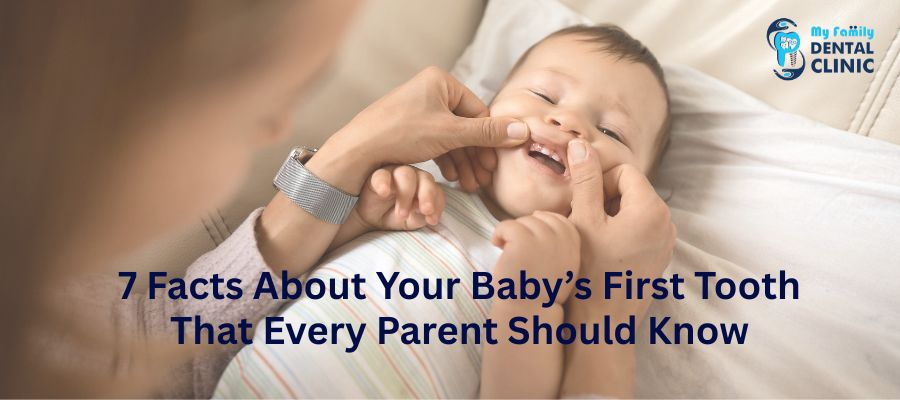
Your baby’s first tooth is a special milestone – it marks the beginning of their beautiful smile! However, many parents are unsure about what to expect during this stage. Understanding how and when your child’s teeth develop helps you care for their oral health from the very start.
At My Family Dental Clinic, Erandwane and Kothrud, our pediatric dental expert Dr. Shravani Deshpande-Sonar (MDS in Pediatric Dentistry) provides gentle, child-friendly guidance to make teething and dental care easy for both kids and parents.
Let’s look at the 7 important facts every parent should know about their baby’s first tooth.
1. The First Tooth Usually Appears Around 6 Months
Most babies get their first tooth between 6 to 10 months, though it can vary. Some may get it earlier, while others might take up to a year. The lower front teeth (central incisors) are usually the first to appear, followed by the upper front teeth.
Related Read: Kids’ Tooth Development Stages: A Guide for Parents
2. Teething Can Cause Mild Discomfort
During teething, your baby might drool more, become fussy, or have swollen gums. Gently massaging their gums with a clean finger or offering a chilled teething toy can help soothe discomfort. However, high fever or diarrhea is not normal – consult your pediatric dentist if these occur.
3. Early Dental Care Starts Before the First Tooth
Even before the first tooth appears, you should start cleaning your baby’s gums using a soft, wet cloth after feeding. Once the first tooth erupts, use a soft baby toothbrush and a tiny smear of fluoride toothpaste to clean it daily.
4. Avoid Bottle Feeding at Bedtime
Letting your baby sleep with a milk bottle can cause early childhood tooth decay, also known as “baby bottle caries.” Always clean your baby’s mouth before bedtime and avoid sugary drinks in bottles.
5. Your Baby’s First Dental Visit Should Be by Age One
According to the Indian Dental Association (IDA), your child’s first dental visit should happen within 6 months of their first tooth eruption or by their first birthday. This early check-up helps detect problems early and guides you on proper oral care routines.
6. Teething Doesn’t Mean You Should Stop Breastfeeding
Many parents worry that teeth mean the end of breastfeeding – but that’s not necessary. You can continue nursing safely. Just make sure to clean your baby’s teeth after feeding to prevent plaque buildup.
7. Every Baby’s Teething Pattern Is Different
Just like walking or talking milestones, teething patterns vary from child to child. Don’t worry if your baby’s teeth come in earlier or later than others – it’s perfectly normal as long as overall growth is healthy.
Final Thoughts: Healthy Habits Start Early
Your baby’s first tooth marks the beginning of their lifelong oral health journey. Early care, gentle cleaning, and regular dental visits can help your child enjoy a cavity-free smile.
At My Family Dental Clinic, Erandwane and Kothrud, Dr. Shravani Deshpande-Sonar (MDS Pediatric Dentistry) specializes in children’s dental care, ensuring every little smile grows strong and healthy.