
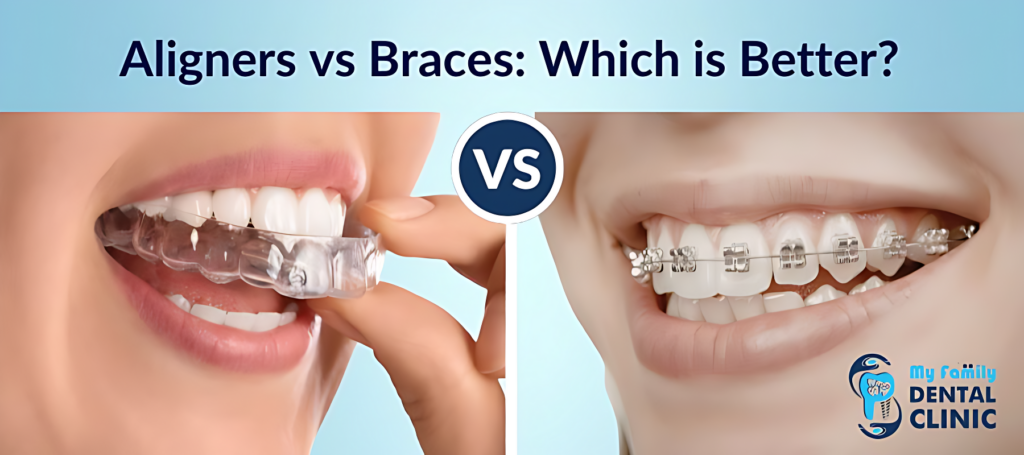
If you are planning to straighten your teeth, you have probably heard about two popular options – braces and clear aligners. Many patients often ask: “Which is better — braces or aligners?”
The answer depends on your dental condition, lifestyle, budget, and personal preference. Both treatments help improve your smile and bite, but they work in different ways.
In this blog, we will explain everything in simple terms so you can choose the right treatment for yourself.
Braces vs Clear Aligners: What Are They?
Braces
Braces are the traditional and highly effective method used for teeth straightening. They use brackets attached to the teeth and wires that gradually move the teeth into the correct position.
Today, braces are available in different types depending on your needs and comfort.
Types of Braces
1. Metal Braces
These are the most common braces made using stainless steel brackets and wires.
Best for:
- Complex alignment problems
- Severe crowding
- Bite correction
- Reliable long-term treatment
2. Ceramic Braces
These work like metal braces but use tooth-coloured or clear brackets, making them less visible.
Best for:
- People who want less noticeable braces
- Adults and working professionals
- Moderate to complex cases
3. Self-Ligating Braces
These braces use a special clip instead of elastic bands to hold the wire.
Best for:
- Faster cleaning
- Less friction
- Comfortable treatment experience
(Lingual braces are also available, where braces are placed behind the teeth, but they are less commonly used today and are considered less practical for many patients.)
Clear Aligners
Clear aligners are transparent, removable trays that fit over your teeth. They are custom-made and changed every few weeks to gradually move your teeth.
How they work:
- You wear a set of aligners for 1–2 weeks
- Each set gently shifts your teeth
- Teeth gradually move into proper alignment
Best for:
- Mild to moderate alignment issues
- Adults and teens who prefer a less visible option
- People with busy lifestyles
Braces vs Clear Aligners: Key Differences
Here is a simple comparison to help you understand:
| Feature | Braces | Clear Aligners |
| Appearance | Visible (metal/ceramic options available) | Nearly invisible |
| Removability | Fixed (cannot remove) | Removable |
| Comfort | May cause irritation initially | More comfortable |
| Cleaning | Slightly difficult | Easy (remove and clean) |
| Diet Restrictions | Avoid sticky & hard food | No major restrictions |
| Clinic Visits | Regular adjustments needed | Fewer visits |
| Effectiveness | Best for complex cases | Best for mild/moderate cases |
| Discipline Required | Less | High (must wear 20–22 hours/day) |
Related Read: Tips for Choosing Your Dentist: Find the Best Dental Care for Your Family
Advantages and Disadvantages
Advantages of Braces
- Highly effective for all types of cases
- Fixed treatment, so no need to remember wearing them
- Good for severe alignment and bite correction
- Often more affordable than aligners
Disadvantages of Braces
- More visible than aligners
- Food restrictions are needed
- Can cause slight discomfort initially
Advantages of Clear Aligners
- Almost invisible appearance
- Removable while eating and brushing
- More comfortable with smooth edges
- Easier to maintain oral hygiene
Disadvantages of Clear Aligners
- Requires discipline and regular wearing
- Not ideal for very complex cases
- Can be more expensive depending on the case
How to Choose the Best Treatment for You?
Choosing between aligners vs braces is not just about looks – it depends on several practical factors.
1. Your Dental Condition
- Severe crowding or bite issues → Braces are better
- Mild to moderate alignment → Aligners can work well
2. Your Lifestyle
- If you attend meetings, college, or social events → Aligners are more convenient
- If you don’t want to worry about removing trays → Braces are easier
3. Discipline Level
Aligners require commitment:
- Wear for 20–22 hours daily
- Remove only while eating and brushing
If you feel you may forget, braces might be a better option.
4. Budget
- Braces are generally more affordable
- Aligners may cost more depending on the brand and case
5. Comfort and Convenience
- Aligners are smooth and comfortable
- Braces may cause slight irritation initially
6. Treatment Time
- Both options usually take 6 months to 2 years
- Depends on the complexity of your case
Related Read: Best Dental Clinic in Pune – My Family Dental Clinic
Common Questions Patients Ask
Which is faster: braces or aligners?
Both can be equally effective. In some mild cases, aligners may work faster.
Are aligners painful?
You may feel slight pressure when changing trays, but it is usually mild.
Can I eat anything with aligners?
Yes, because you remove them while eating. But remember to wear them again after meals.
Do braces give better results?
For complex cases, yes. Braces are more powerful in controlling tooth movement.
Conclusion: Which is Better – Aligners or Braces?
There is no one-size-fits-all answer.
- Choose metal braces if you have complex dental issues or want a cost-effective solution
- Choose clear aligners if you want a comfortable, invisible, and flexible option
The best way to decide is to consult a dentist who can examine your teeth and guide you properly.